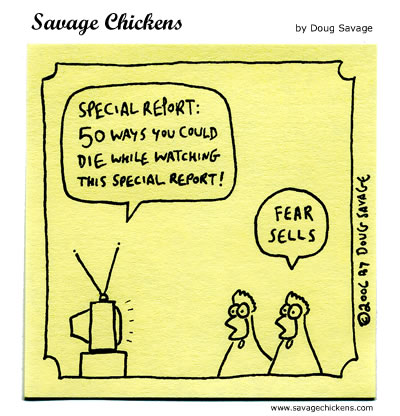
The news is an influential medium that plays a huge role in conditioning Americans. With 35 million nightly viewers, it is considered a trusted informant on the worlds events (Radford, 66). A problem with Americans using the news as their source of current events is that the reported stories are decontextualized and filtered through a journalist, which adds a bias to the stories. Not everything newsworthy makes it onto the news. What often does make it onto the news are crimes, sometimes bumping more important news off the air. A study done by Professor Joe Angotti from the University of Miami concluded that 30% of news air time is spent on crime, 15% is on the government and politics, 7% is on medicine and health care, and 2% is on education (Radford, 69). The disproportionate coverage of crime conditions people to fear crime more than they should. The more violence people watch on TV, the more conditioned they will be to perceive the world as violent.
By emphasizing crimes and violence, the news spreads a false image of the world to viewers. For example, in 1994, a Time magazine article ran a headline across the top of two pages that read, “Not a month goes by without an outburst of violence in the workplace--now even in flower nurseries, pizza parlors and law offices” (Glassner, 26). Following this story, more than five hundred stories came out about violence in the workplace in 1994 and 1995 alone (Glassner, 27). Fear of random attacks by coworkers spread across the country. It was not until a journalist from The Wall Street Journal, Erik Larson, discovered the actual statistics that the myth of a workplace crisis was dispelled (Glassner, 27). He found that included in the scary statistics that newspapers were proliferating was the deaths of the most vulnerable workers: police, security guards, and taxi drivers, to name a few. Taxi drivers alone have a “homicidal rate twenty-one times the national average” (Glassner, 27). The news can spread false or exaggerated information to the public using misleading data.